Relations between India and Bangladesh have soured after protests outside missions of the neighbouring countries, deemed as security concerns by both, amid already-tense ties due to developments that are directly or indirectly connected to ousted former Bangladeshi prime minister's exile in New Delhi.
Over the past few days, both countries have summoned each other's envoys, visa centres have been shut amid protest gatherings at the high commissions in Bangladesh and India.While last week Dhaka police stopped a group of protesters marching towards the Indian High Commission in Dhaka's Gulshan area, the Bangladeshi High Commission in Delhi saw massive protest by several outfits - led by Vishwa Hindu Parishad (VHP) - against the alleged atrocities on Hindus in the neighbouring Bangladesh, in the backdrop of the lynching of a man named Dipu Chandra Das recently.
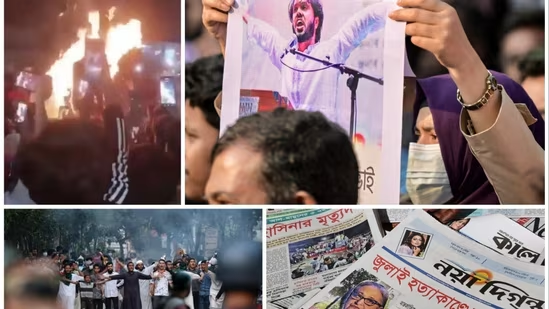
The bittering relations come at a time when Bangladesh is reeling under violence triggered by the killing of a prominent student leader - Sharif Osman Hadi.
India-Bangladesh tensions: What has happened so far | A timeline
November 17: Sheikh Hasina is sentenced to death by a Bangladeshi court for her involvement in the deadly violence in the student-led uprising in 2024. After the sentence, India responds saying that it "remains committed to peace, democracy, inclusion and stability in Bangladesh", while Dhaka seeks handing over of the 'fugitive' former PM by India.
December 12: Prominent student leader, Inqilab Moncho's Sharif Osman Hadi, is shot by by masked gunmen while leaving a Dhaka mosque.
December 15: NCP leader Hasnat Abdullah makes a controversial statement saying that Bangladesh can shelter separatist forces from India and sever the seven northeastern states - also known as the "seven sisters - from the rest of the country. Abdullah, one of the key student leaders who led the protests against Hasina, was speaking at an event organised in Dhaka by Inqilab Mancha.
December 17: Police stops a group of protesters marching towards the Indian High Commission in Dhaka's Gulshan area, demanding the return of deposed prime minister Sheikh Hasina and others who fled during and after the July uprising last year, according to The Daily Star. The protest march prompts India and NCP leader Abdullah's remark prompts India to summon Bangladesh high commissioner Riaz Hamidullah and register a protest over the deteriorating security environment in the neighbouring country and plans by extremist elements that could affect the security of the Indian mission in Dhaka.
December 18: Osman Hadi succumbs to injuries during treatment at a hospital in Singapore. Sharif Osman Hadi was a key figure in last year's pro-democracy uprising, during which Sheikh Hasina stepped down as the prime minister and fled the country. Hadi's death sparks fresh violence in Bangladesh, with protesters taking to streets, vandalising and burning down news offices.
December 18: Amid the protests, a Hindu worker named Dipu Chandra Das is lynched by a mob which ties his body to a tree and sets it on fire. The incident takes place on the night of December 18, along the Dhaka-Mymensingh highway in the Jamirdia Dubaliapara area, and is initially reported to have been triggered by alleged insult to religion by Das. Police and accounts by family later suggest that a workplace dispute led to Das's lynching.
December 20: A group of protesters gathers near the Bangladesh mission in New Delhi and is dispersed by police. Indian visa application centre in Bangladesh's Chittagong (Chattogram) is shut down indefinitely amid security concerns.
December 21: India expresses concern at the “horrendous killing” of the Hindu man. Ministry of External Affairs spokesperson Randhir Jaiswal says India is keeping a close watch on the evolving situation in Bangladesh. Jaiswal also dismisses reports of a security breach at the Bangladesh high commission in New Delhi as “misleading propaganda".
December 22: Protest incidents are reported at the Bangladesh Visa Centre in West Bengal's Siliguri, resulting in Bangladesh to suspend visa operations in the town along with Delhi. The assistant high commission of Bangladesh in Tripura also makes a similar announcement on the suspension of visa services after protests were held outside the mission on Sunday, reports say.
December 23: Bangladesh foreign ministry summons Indian envoy over security of Bangladeshi missions. The incidents cited for the summon include "vandalism at the Bangladesh Visa Centre in Siliguri on December 22 and a protest outside the Bangladesh High Commission in New Delhi on December 20.
culled from Hindustan Times